For parents
Can my teen train if they don't play a sport?
By Trevor Cyr, founder and head coach · October 13, 2026 · 3 min read
Yes.
And they might need it more than the kids who play three sports.Most places in Durham that train teens are built for athletes.The Academy isn't.Here's why that matters, what the numbers say about teens today, and what a kid who has never played anything does in my room.
Most teens aren't getting enough
Canada's movement guidelines for kids 5 to 17 ask for at least 60 minutes of moderate to vigorous activity a day.They also ask for muscle and bone strengthening activities at least 3 days a week.
Statistics Canada measured it with activity trackers from 2022 to 2024.Only 21% of teens 12 to 17 met the activity recommendation, down from 36% in 2018 to 2019.For teenage girls it was 8%.
A kid on a rep team gets some of that from practice.A kid who doesn't play anything usually gets a lot less, and nobody is teaching them how to train.
What strength training does for a teen who doesn't play
The National Strength and Conditioning Association lists what a properly designed and supervised program does for kids and teens.Stronger and more powerful.Better movement skill.A better cardiovascular risk profile.Better psychosocial well-being.More likely to keep exercising as an adult.
None of those depend on a game on the weekend.The 2014 international consensus on youth strength training, written by twenty authors across paediatric medicine, exercise science and coaching, says the same thing about all young people, not only athletes.
The last one on that list is the one I care about most.A teen who learns to train properly at 13 has a skill for life.A teen who walks into a gym for the first time at 25 is starting from zero, usually alone.
Why the room matters
A lot of teens who don't play a sport have decided the gym isn't for them.It's full of people who already know what they're doing, and nobody shows them anything.
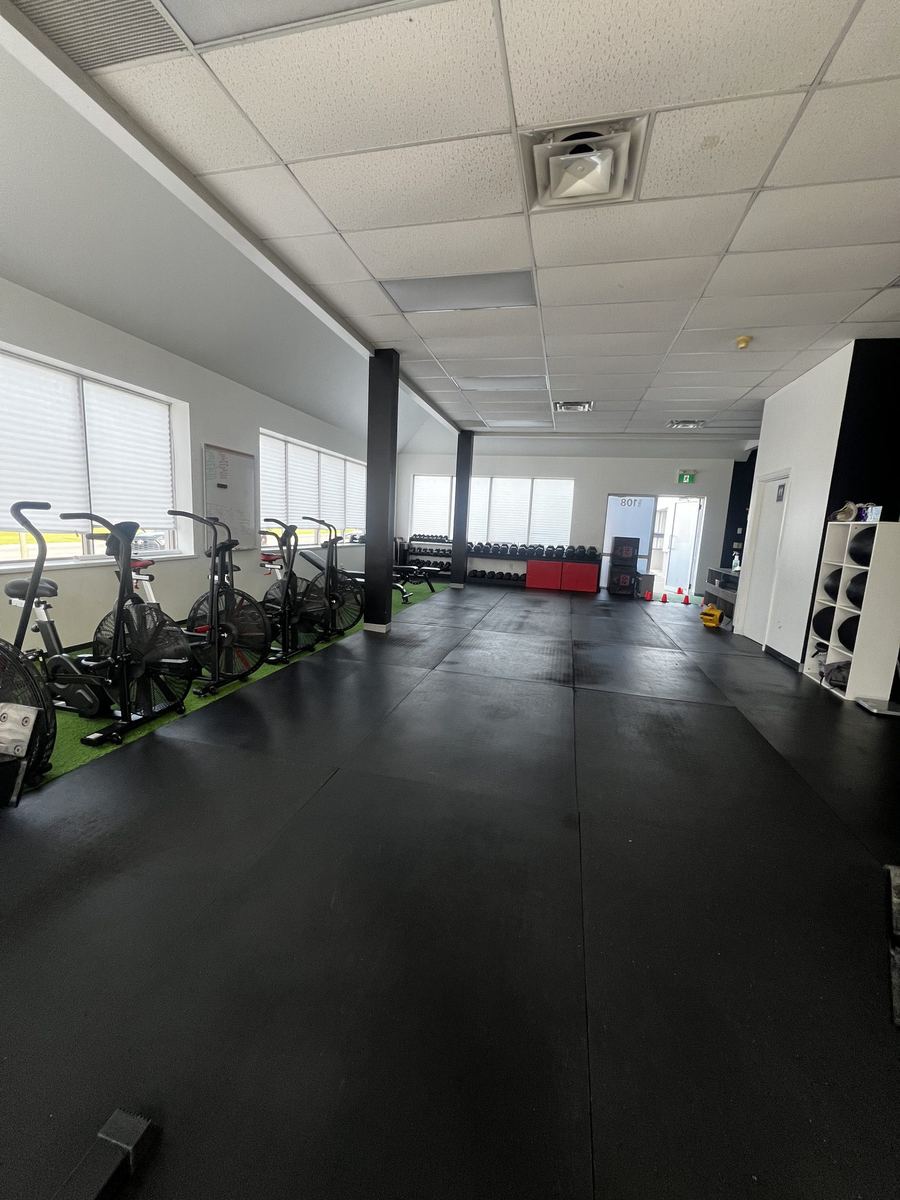
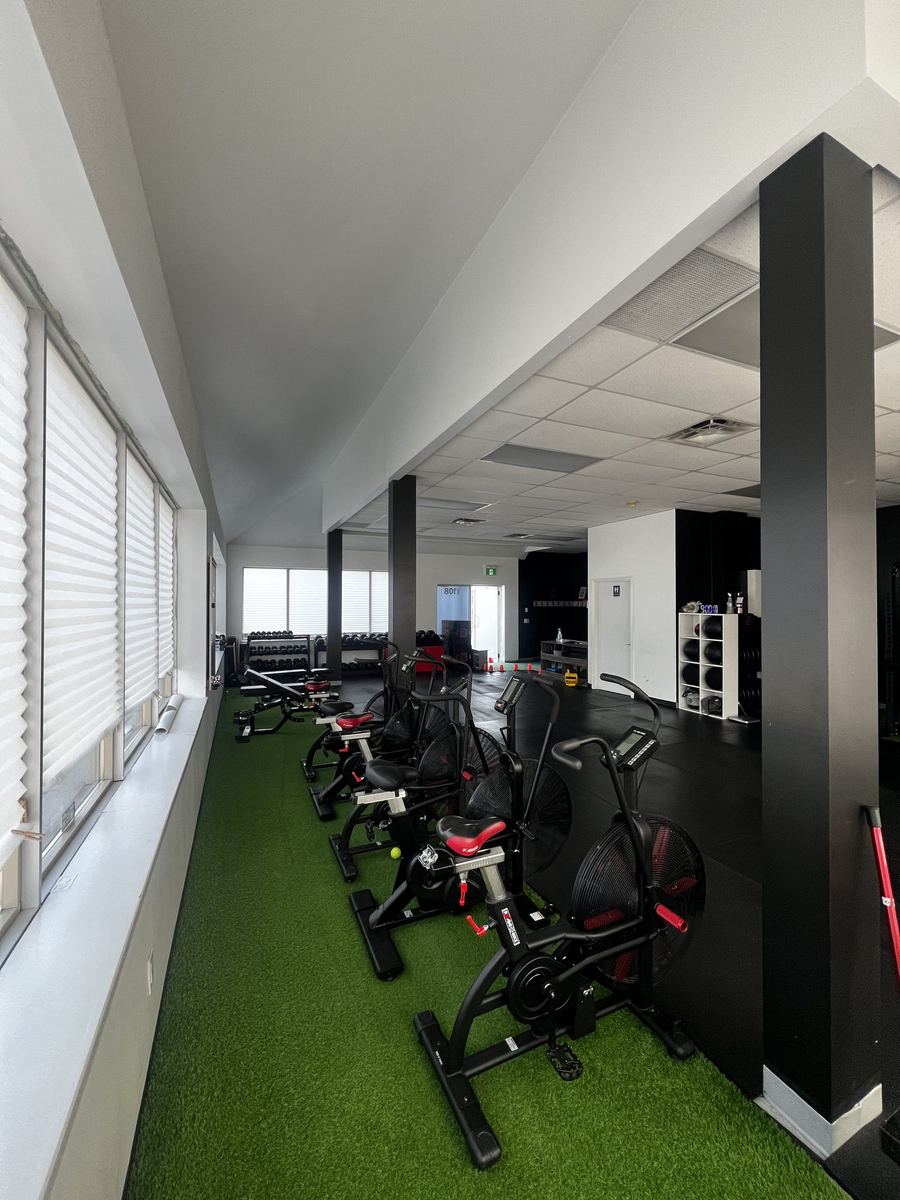
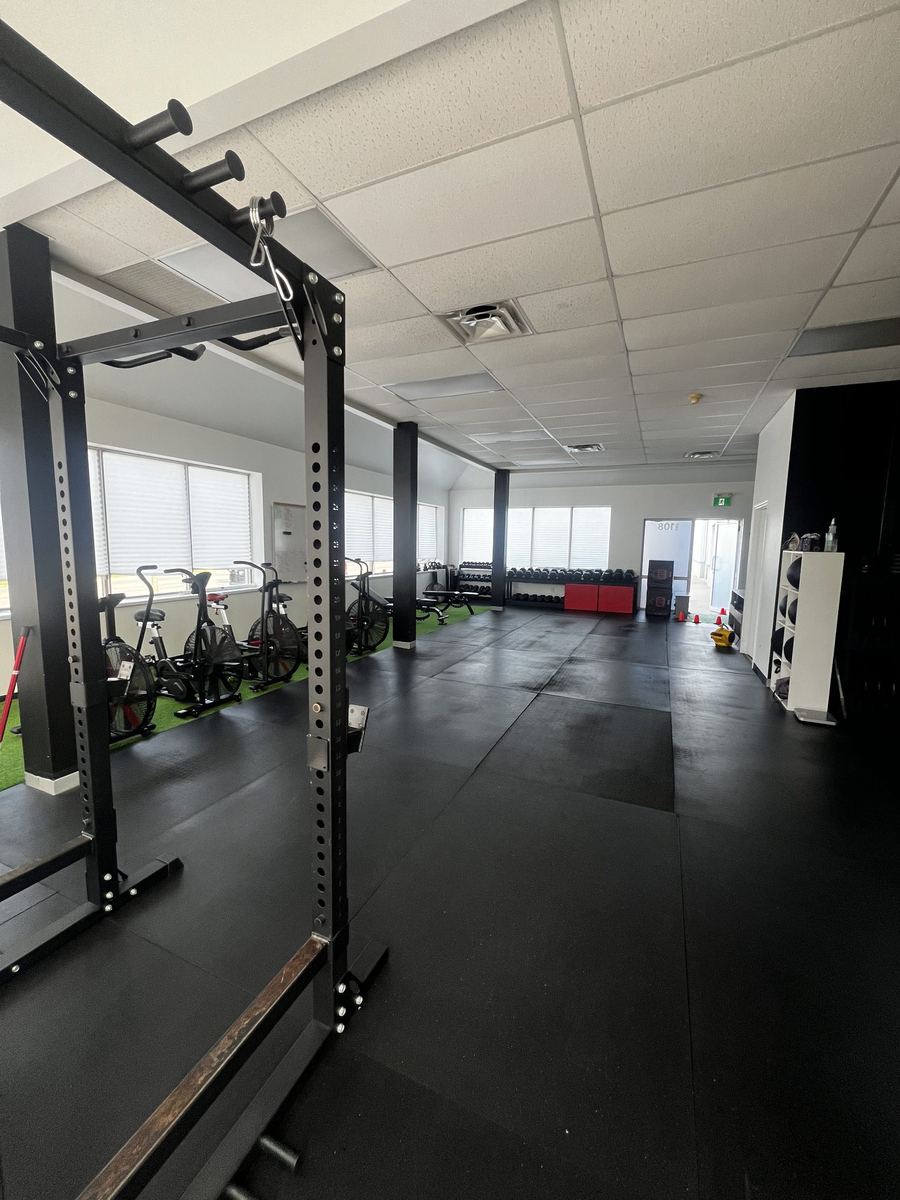
The Academy is built the other way.Ten kids a class, ages 12 to 18, and I coach every session myself.Part of the room plays rep hockey or lacrosse and part of the room has never played anything.Everyone does the same program, scaled to where they are.
The training isn't sport-specific and there's no testing.Nobody gets ranked against the kid beside them.They get taught, corrected and pushed, and they get a little better every week.
What they actually do
Every class is fifty minutes.It starts with mobility and movement work, so they move well before they move fast or heavy.
Then the strength block: squats, deadlifts, presses and pulls.Every lift is taught before any weight goes on, and the weight goes up a little at a time.Most teens have never been shown how to lift, athletes included.
It finishes with speed or conditioning work on the turf, the sled or the bike.Faster and fitter, whatever they end up doing with it.
If you're wondering whether it's safe, that has its own post.So does how many days a week.
And you can train too
Adult classes start at 6:00 PM, right after the 5:00 Academy class, in the same room.Several Academy parents already do this.One trip, and your teen sees you training too.
Come try a class
The first Academy class is free.Pick a Monday to Thursday at 4:00 or 5:00 and drop your teen off.Ages 12 to 18, ten a class, no sport required.
Any questions before that, email me at trevor@takecontroltraining.com and I'll answer them myself.
Sources
- Statistics Canada. Directly measured physical activity and sedentary time in Canada: New results from the Canadian Health Measures Survey, 2022 to 2024. The Daily, 17 October 2025. www150.statcan.gc.ca/n1/daily-quotidien/251017/dq251017b-eng.htm
- Canadian Society for Exercise Physiology. Canadian 24-Hour Movement Guidelines for Children and Youth (5-17 years): An Integration of Physical Activity, Sedentary Behaviour, and Sleep. 2016. csepguidelines.ca/guidelines/children-youth/
- Faigenbaum AD, Kraemer WJ, Blimkie CJR, et al. Youth Resistance Training: Updated Position Statement Paper From the National Strength and Conditioning Association. Journal of Strength and Conditioning Research. 2009;23(Suppl 5):S60-S79. doi.org/10.1519/JSC.0b013e31819df407
- Lloyd RS, Faigenbaum AD, Stone MH, et al. Position statement on youth resistance training: the 2014 International Consensus. British Journal of Sports Medicine. 2014;48(7):498-505. doi.org/10.1136/bjsports-2013-092952
Source 1 was opened on 13 October 2026 and the 21%, 36% and 8% figures checked against it. Source 2 was opened on the CSEP site and both guideline sentences checked. Source 3's benefit list was checked against the full text on 28 September 2026 for the safety post. Source 4's citation and abstract were checked against university repository records; the full text is paywalled.